


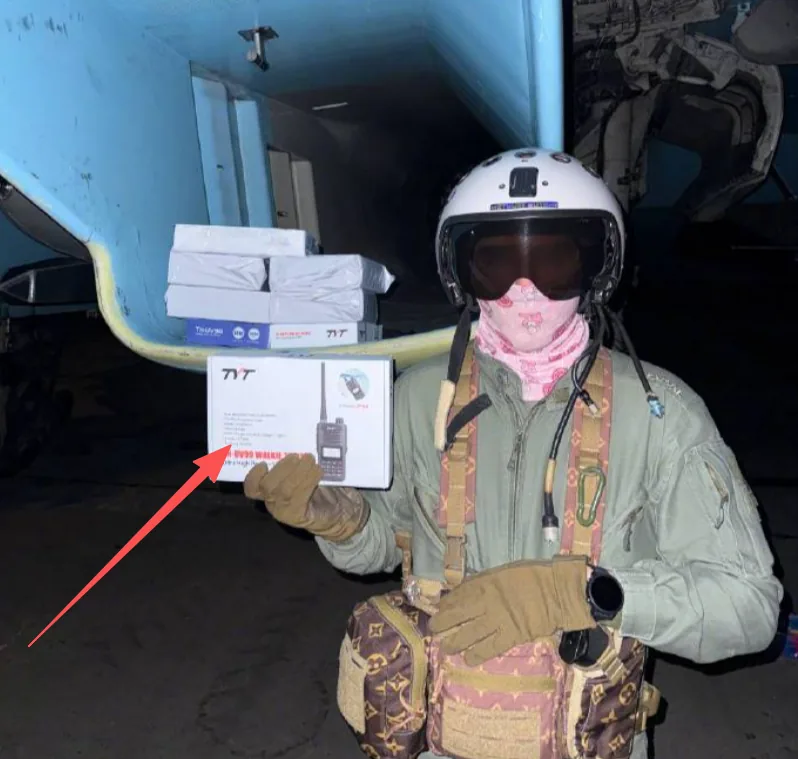
On October 19, 2026, a Chinese military affairs blogger with millions of followers posted a photo on Weibo that quickly made the rounds among radio enthusiasts: a Russian pilot in full flight gear — white helmet, flight suit and chest rig — standing in front of a Sukhoi Su-34M fighter-bomber and holding a boxed handheld two-way radio. The caption identified the radio as the TYT TH-UV99, a dual-band handheld that retails in China for less than CNY 300 — roughly USD 40.

The photo spread quickly because of the contrast it suggests. The Su-34M is a twin-seat strike fighter equipped with integrated military communication systems, yet the device in the pilot’s hands is an ordinary consumer-grade handheld radio that anyone can buy online for the price of a pair of running shoes.
What is the TYT TH-UV99?
The TH-UV99 is an analog dual-band handheld radio from TYT (Tytera), a Chinese manufacturer best known internationally for value-focused amateur and commercial radios. According to the manufacturer’s published specifications, the TH-UV99 covers the 136–174 MHz VHF and 400–480 MHz UHF bands, delivers up to 10 watts of transmit power on VHF, and supports dual-band dual-standby operation with 200 programmable channels, CTCSS/DCS signaling and DTMF. The radio uses a conventional handheld form factor — external antenna, display, numeric keypad and a physical PTT button — and ships with a 2,800 mAh battery and USB Type-C charging.
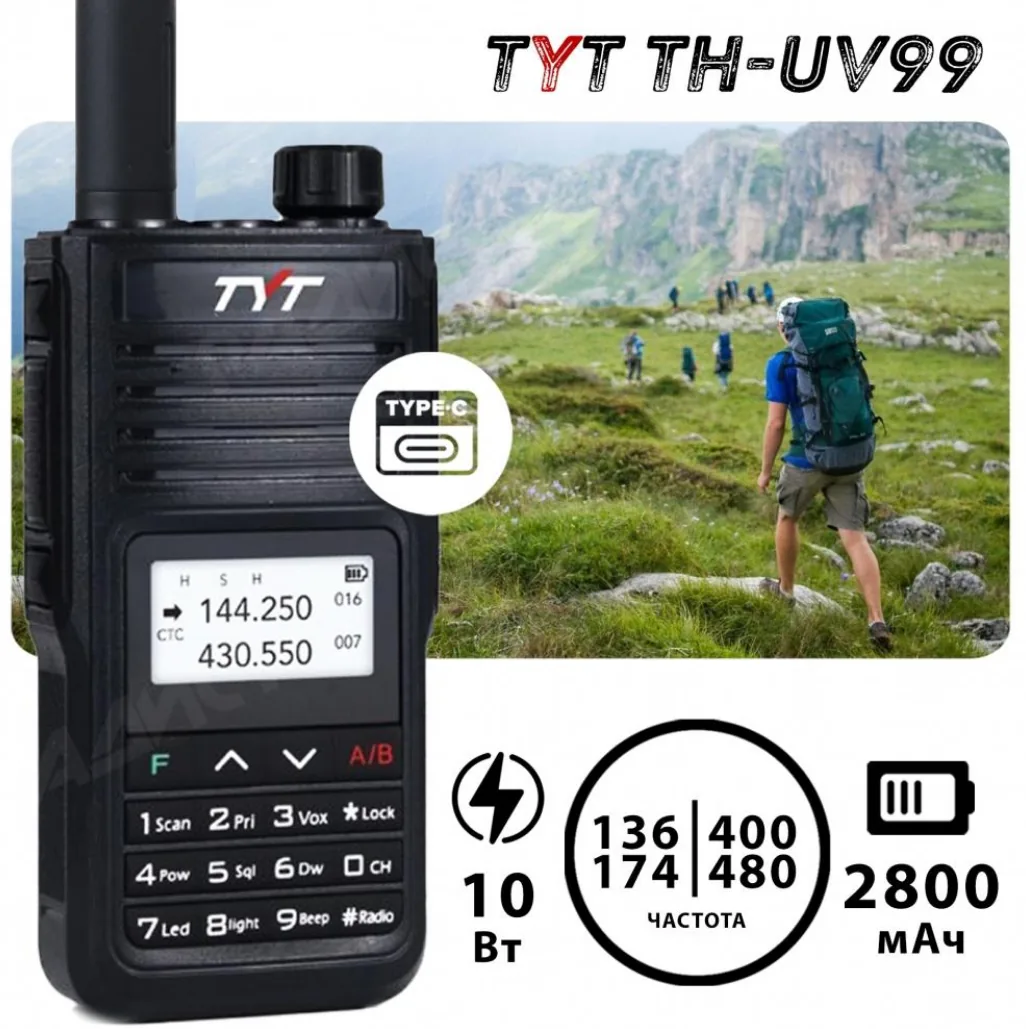
Nothing about the hardware is exotic. That is precisely the point of the story: it is a regular entry-level handheld of the kind exported by the container-load to dealers, distributors and amateur radio communities worldwide.
What the photo does — and does not — tell us
It is worth being precise about what the image actually shows. A photo of a pilot holding a radio and its retail box confirms only that the device exists in that setting. It does not establish the person’s identity, where or when the photo was taken, or whether the radio is used operationally. A Su-34M crew communicates through the aircraft’s onboard radio sets, intercom and dedicated military communication equipment — a handheld purchased for under USD 40 plays no part in that chain, and there is no indication that the TH-UV99 has been formally adopted by any military.
If the pilot did carry the radio personally, the more plausible explanations are mundane: short-range coordination on the ground during flight operations, ground-crew communication, or simply keeping a spare radio at hand. Military personnel using consumer electronics for auxiliary tasks is neither new nor remarkable.
Civilian radios in military settings: a familiar pattern
This would not be the first time consumer handheld radios appeared in military contexts. Chinese state television’s military programming has shown deck crew on an aircraft carrier using compact handheld radios for on-deck coordination. And in 2022, Russian aviation communities famously crowdfunded purchases of Japanese Yaesu FTA250L and FTA450L air-band handhelds for pilots, so that aircrew forced down over hostile territory would have a means of emergency communication after landing. Photos from that campaign show tables covered with Yaesu handhelds, flight helmets and airfield maps.

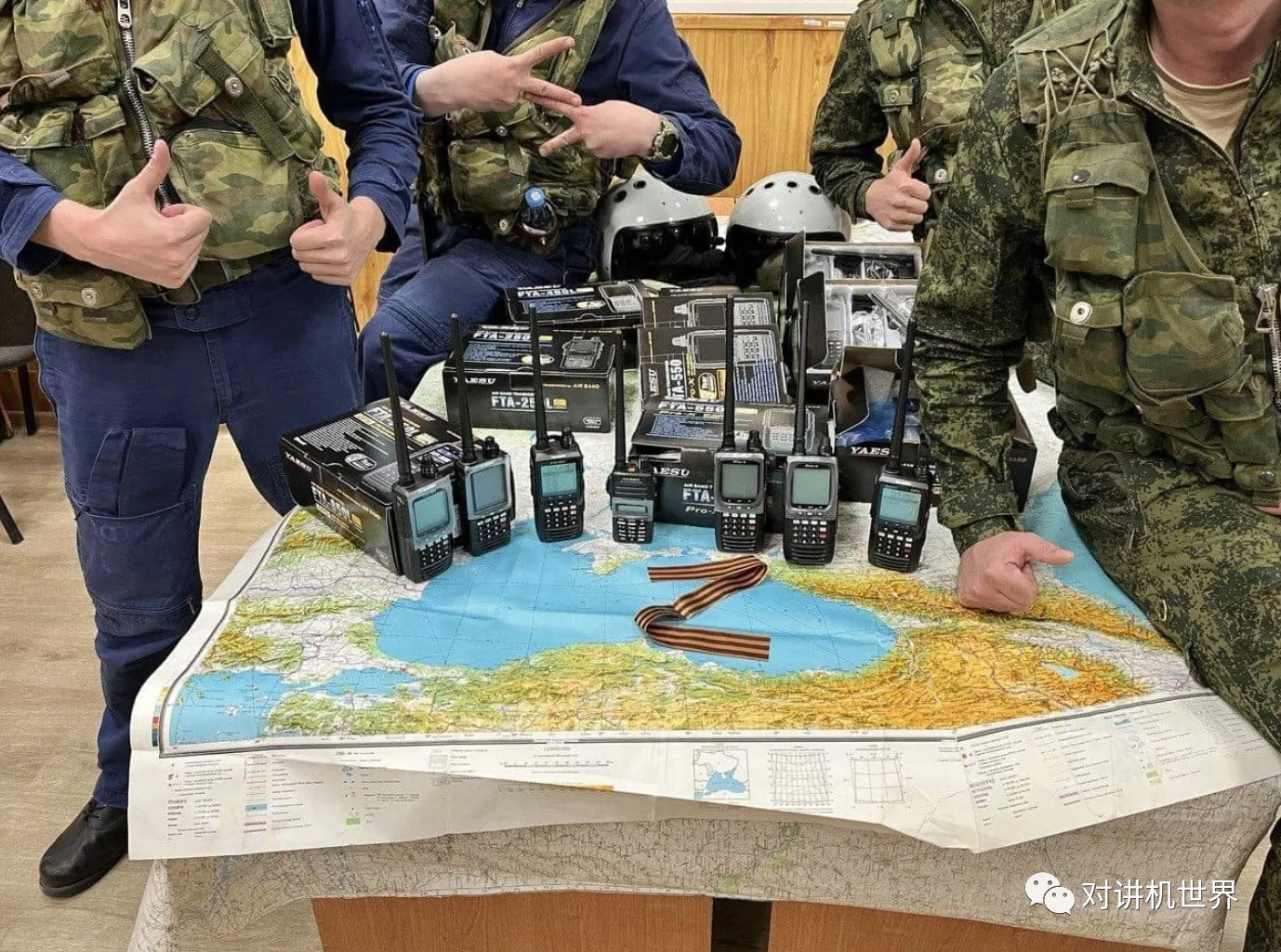

The pattern is consistent: professional aircraft and military vehicles carry integrated, hardened communication suites, but handheld consumer radios fill the gaps — ground movement, post-flight coordination, backup links. They are cheap, widely available, use standard channels, and work without any integration.
The takeaway for radio buyers and dealers
Set aside the headlines, and the story is really about the maturity of China’s two-way radio industry. From entry-level analog handhelds like the TH-UV99 to DMR digital radios and professional trunking systems, Chinese manufacturers now cover the entire product ladder — which is why Chinese brands hold a large share of the global two-way radio market. For dealers, distributors and fleet operators, that translates into a practical advantage: a wide selection of models, aggressive pricing, and usable performance for everyday voice communication.
The TH-UV99 will not replace an aircraft’s communication suite, and no serious buyer expects it to. But a sub-$40 dual-band handheld that ends up photographed next to a modern strike fighter says a great deal about how far affordable Chinese radios have come — and why they remain the default choice for buyers who need reliable voice communication without an enterprise budget.
TYT handheld radios in our store
The TH-UV99 itself is hard to find outside China, but the same product family is in our warehouse and shipping worldwide. The three TYT handhelds our wholesale customers buy the most:
TYT TH-UV98 — the 10 W dual-band analog
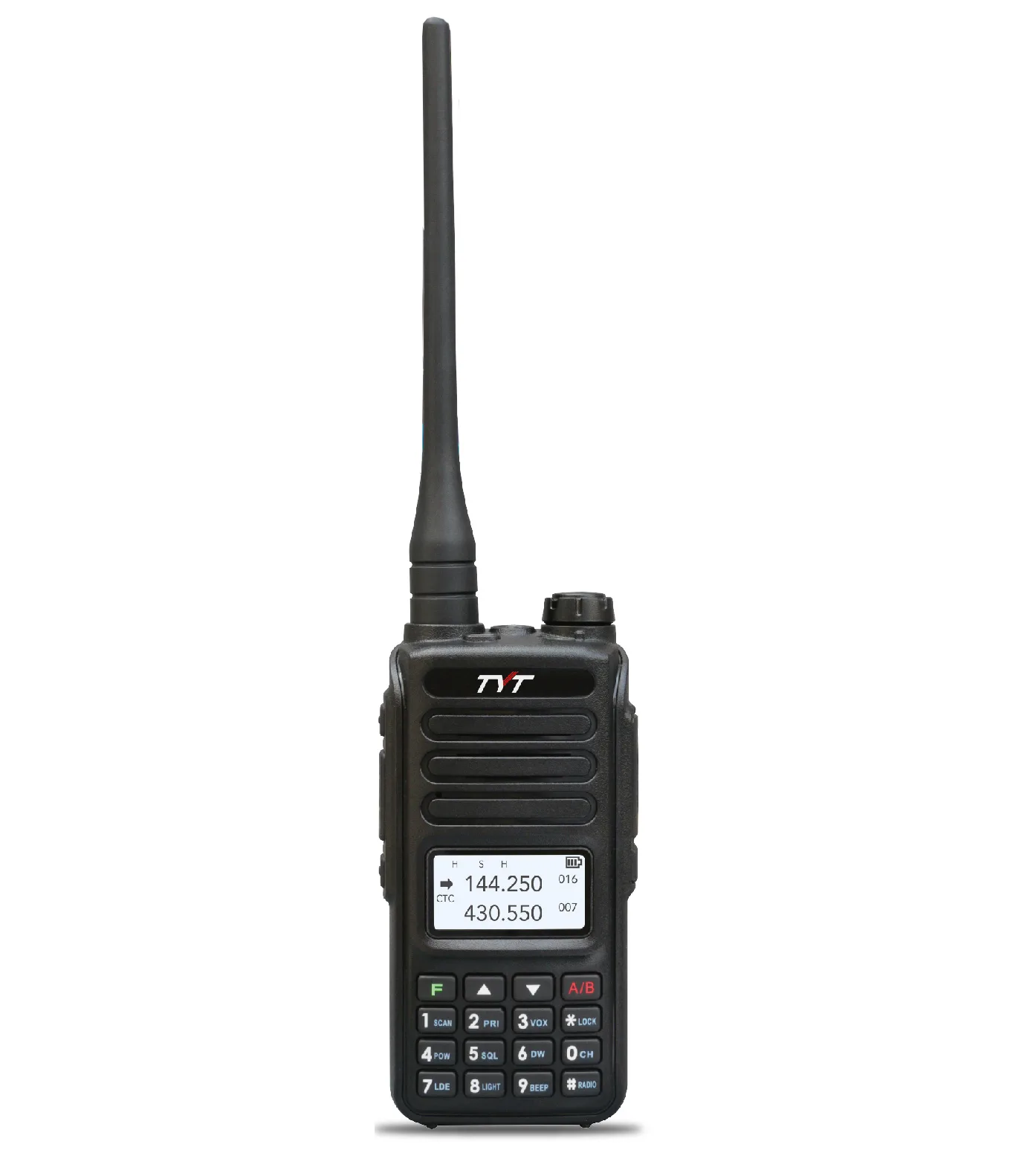
Dual band VHF/UHF, up to 10 W transmit power and FM broadcast receive — the closest cousin to the TH-UV99 in our catalog. TYT TH-UV98 — $33.25
TYT TC-15 — the 10 W workhorse

10 W output with noise cancellation on both bands — built for loud job sites and long shifts. TYT TC-15 — $60.00
TYT MD-380 GPS — the step into digital

DMR Tier II with GPS and dual time slot — the affordable entry into professional digital fleet communication. TYT MD-380 GPS — $62.70